
Studying in Japan is a dream for many Bangladeshi students seeking high-quality education, global career opportunities, and an enriching cultural experience. Over the last decade, Japan has opened its doors wide to international students, especially from South Asia. If you’re wondering how to study in Japan from Bangladesh, this guide covers everything you need to know—from eligibility and costs to the application process and frequently asked questions.
Why Choose Japan for Higher Studies?
Japan is known for its excellence in science, engineering, robotics, medicine, and information technology. Here are a few reasons why Japan is an ideal destination for Bangladeshi students:
- World-class universities with modern facilities and global recognition
- Affordable tuition fees compared to many Western countries
- Scholarship opportunities including MEXT, JASSO, and private scholarships
- Part-time job facilities for international students
- A safe and technologically advanced society
- Permanent residency and job prospects after graduation
Step-by-Step Guide to Study in Japan from Bangladesh
1. Research Universities and Programs
Start by researching Japanese universities that offer your preferred course in English or Japanese. Many universities in Japan now offer full-degree programs in English, particularly at the graduate level. Some top universities include:
- University of Tokyo
- Kyoto University
- Osaka University
- Waseda University
- Tohoku University
Visit their websites and check eligibility, course structure, and application timelines.
2. Meet the Admission Requirements
Academic Requirements:
- Undergraduate Programs: HSC or equivalent with a good GPA
- Postgraduate Programs: A bachelor’s degree from a recognized university
Language Requirements:
- Many universities accept international students without IELTS if the course is in Japanese and the student has JLPT certification (Japanese-Language Proficiency Test).
- For English-taught programs, some universities may ask for TOEFL/IELTS, while others may waive it if your previous education was in English.
Other Documents:
- Academic transcripts
- Passport copy
- Letter of recommendation
- Statement of purpose or study plan
- Resume (for graduate programs)
- Proof of funds
3. Learn the Japanese Language (Optional but Highly Recommended)
Even if you’re applying for an English-taught course, learning basic Japanese is a huge advantage. It helps in daily communication, securing part-time jobs, and eventually settling down in Japan.
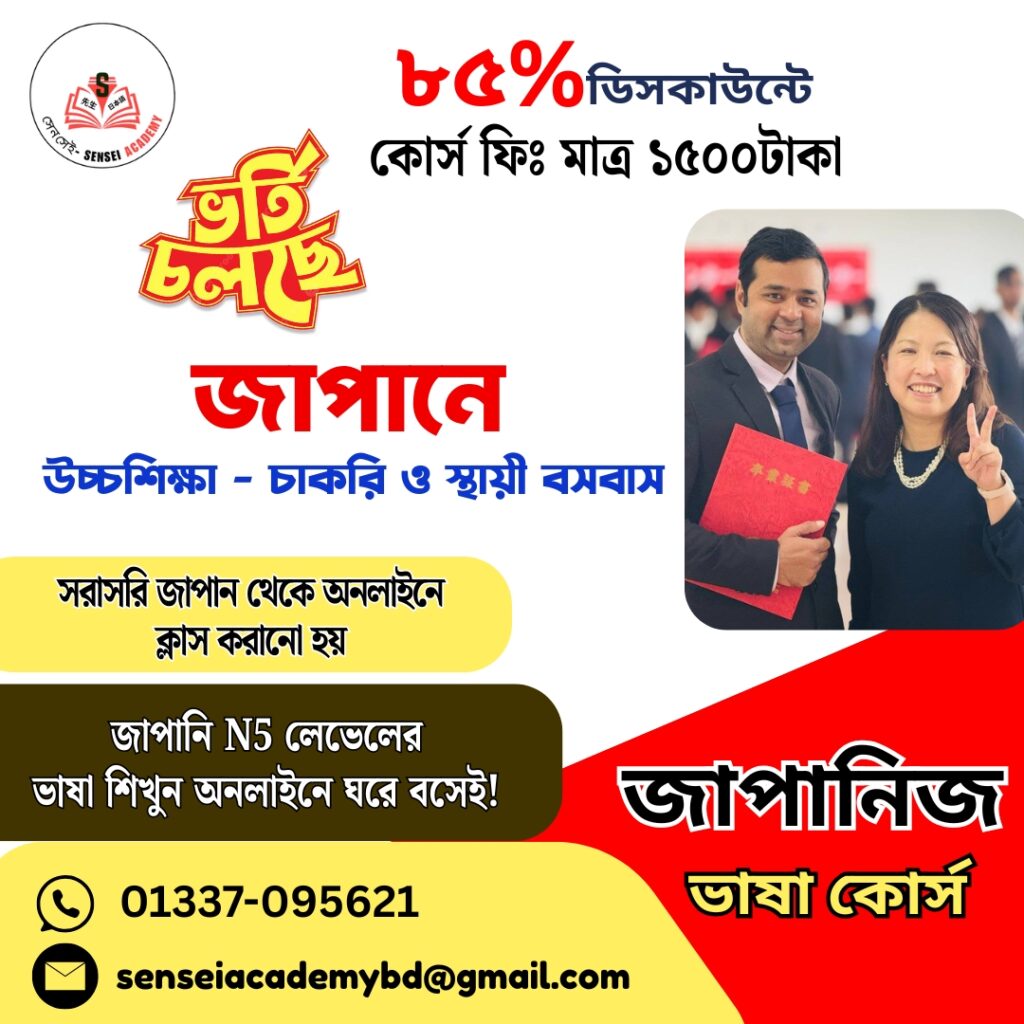
Institutes like Sensei Academy offer specialized Japanese language courses online directly from Japan, making it easier for Bangladeshi students to prepare in advance.
4. Apply for Admission
Each university has its own online portal where you can create an account and submit your application. Make sure to apply before the deadline and upload all required documents.
After acceptance, the university will send you a Certificate of Eligibility (COE) which is essential for the student visa application.
5. Apply for Student Visa
Once you receive your COE, visit the Japanese Embassy in Bangladesh with:
- Passport
- COE
- University admission letter
- Visa application form
- Passport-sized photos
- Proof of financial support
Visa processing usually takes 5-10 working days.
Study in Japan from Bangladesh Cost Breakdown (Approx.)
| Item | Monthly Cost (in BDT) | Yearly Cost (in BDT) |
| Tuition Fees | 25,000 – 80,000 | 300,000 – 960,000 |
| Living Expenses | 40,000 – 60,000 | 480,000 – 720,000 |
| Health Insurance | 1,000 – 2,000 | 12,000 – 24,000 |
| Transportation & Misc. | 5,000 – 10,000 | 60,000 – 120,000 |
Total yearly cost: Approximately BDT 8–12 lakhs, depending on your location and lifestyle in Japan.
Can You Study in Japan from Bangladesh Without IELTS?
Yes! One of the biggest advantages of choosing Japan is that you can study without IELTS. Many universities offer English-taught courses and assess English proficiency through interviews or academic history instead. Alternatively, you can opt for Japanese-taught programs by proving your language proficiency through the JLPT (N5 to N1 levels).
Finding the Right Study in Japan from Bangladesh Agency
While it’s possible to apply on your own, having the right guidance can make the process smoother and error-free. An experienced and reliable education consultancy like Sensei Academy can help you with:
- University selection
- Visa documentation
- JLPT preparation
- Language training
- Pre-departure support
- Online classes directly from Japan
Scholarships for Bangladeshi Students in Japan
- MEXT Scholarship – Government-funded, covers full tuition, living, and airfare
- JASSO Scholarship – For self-financed international students
- University Scholarships – Offered by individual institutions
- Private Scholarships – Based on merit and financial need
Part-Time Job Opportunities in Japan
International students are allowed to work up to 28 hours per week during semesters and up to 40 hours during holidays. Common part-time jobs include:
- Restaurants and cafes
- Convenience stores
- Language tutoring
- Factory work
- Delivery services
This income often helps students cover living expenses partially or fully.
Post-Graduation Opportunities
After completing your degree, you can either:
- Apply for a Job Seeker Visa Extension
- Get hired by a Japanese company and switch to a Work Visa
- Eventually apply for Permanent Residency after a few years of work
FAQs – Study in Japan from Bangladesh
Q1: How much does it cost to study in Japan from Bangladesh?
Answer: On average, the total yearly cost including tuition and living expenses is around BDT 8–12 lakhs. Scholarships and part-time jobs can significantly reduce this burden.
Q2: Can I study in Japan without knowing Japanese?
Answer: Yes. Many universities offer English-medium programs. However, learning Japanese is highly recommended for jobs, daily life, and settling down.
Q3: Do I need IELTS to apply?
Answer: Not always. Many universities accept students based on their academic background or conduct their own English proficiency tests. Japanese-taught programs require JLPT certification.
Q4: Is there any age limit for studying in Japan?
Answer: There’s no official age limit, but younger applicants are often preferred, especially for scholarships.
Q5: Can I work while studying in Japan?
Answer: Yes. You are allowed to work part-time (28 hours/week) with a work permit (easily available once you arrive).
Q6: How long does it take to process the student visa?
Answer: Usually between 5 to 10 working days after submission, provided you have the COE and required documents.
Final Thoughts
Studying in Japan from Bangladesh is a life-changing opportunity. With proper planning, language preparation, and guidance from a trusted source like Sensei Academy, you can unlock a future filled with academic excellence, financial independence, and international exposure.
Whether you want to pursue higher education, land a high-paying job, or settle abroad, Japan offers it all. The first step begins with the right information and expert guidance—and that’s what we’re here to provide.
Ready to Start Your Journey to Japan?
Join our Free Seminar and get personalized guidance from Japanese university alumni and language experts.
📞 Call: 01337-095621
📧 Email: contact@senseiacademy.com / senseiacademybd@gmail.com
Sensei Academy – Your Gateway to Japan